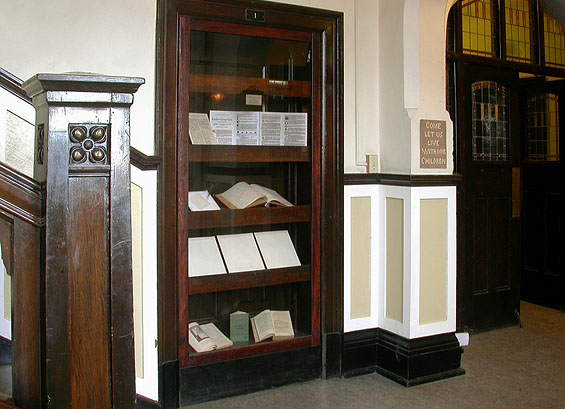
Occupations of an Unknown Kindergartner, 2005, installation view
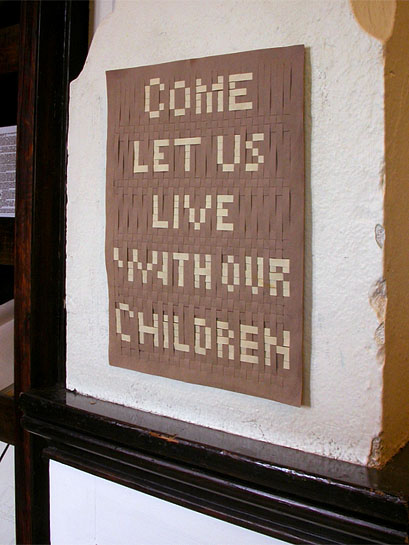
Occupations of an Unknown Kindergartner, 2005, detail (Fröbel quote, woven paper)
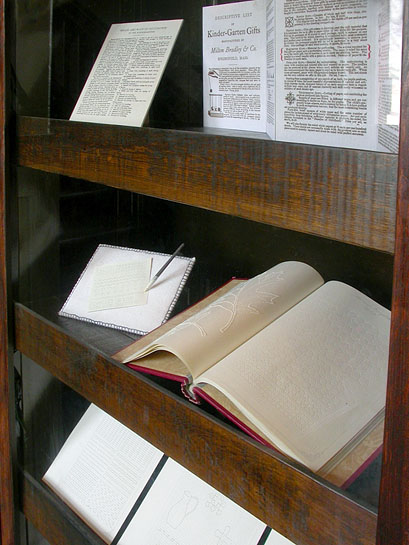
Occupations of an Unknown Kindergartner, 2005, installation detail
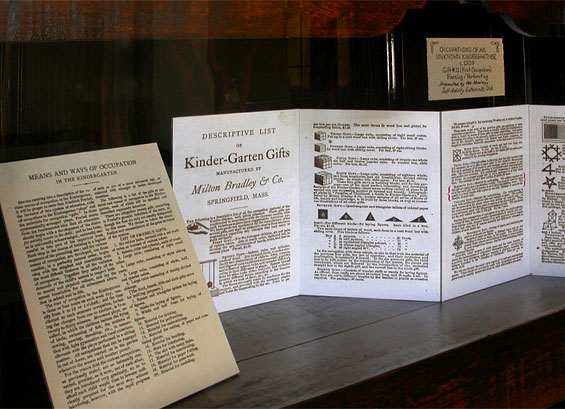
Occupations of an Unknown Kindergartner, 2005, detail (Fröbel concepts)
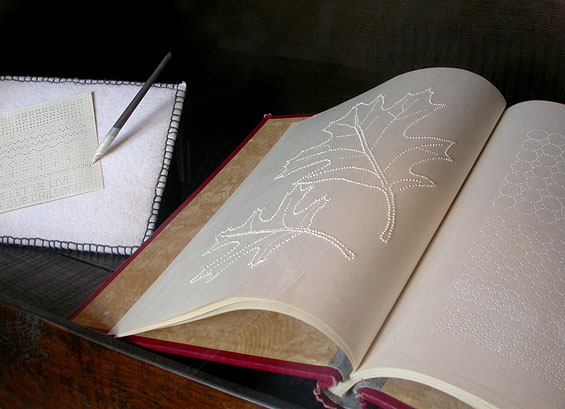
Occupations of an Unknown Kindergartner, 2005, detail (paper piercing exercises)
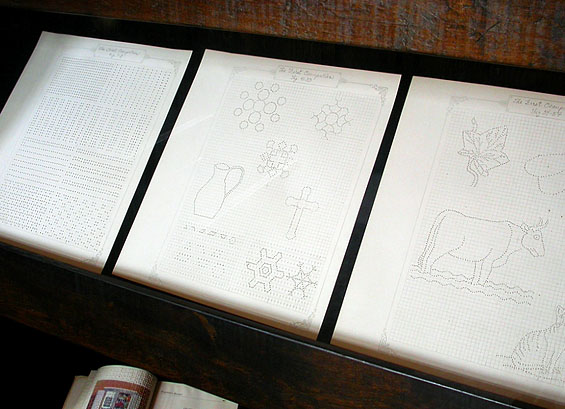
Occupations of an Unknown Kindergartner, 2005, detail (pierced paper)
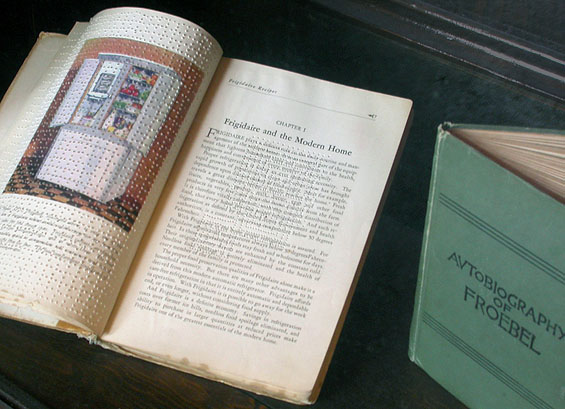
Occupations of an Unknown Kindergartner, 2005, detail (pierced book)
Occupations of an Unknown Kindergartner, 2005
Installation
paper, found reference material, fabricated perforation tools; dimensions variable
This is one of many projects based on the ideas of Friedrich Fröbel (1782-1852), the German educator who designed, implemented and named the first kindergarten program. Fröbel’s program fashioned itself around a philosophy of unity, leading children to manipulate materials through various exercises (called Gifts and Occupations) to address forms of Nature, Knowledge and Beauty. Key modernist architects, such as Frank Lloyd Wright and Le Corbusier, passed through the program in its heyday, and some writers have made the case that it provided the seed-pearl of modernism.
Through an intimate exploration and reinvention of Fröbel’s exercises, Clark Espinal’s contemporary manifestations take the form of “found objects,” which serve to highlight the parallels between Fröbel’s concepts and modernist ideals. Occupations of an Unknown Kindergartner is staged as the found archives of a teacher who had studied the Fröbel program, and consists of notebooks and papers illustrating the exercises of the first Occupation (Perforation). In many ways, the simplicity and precision found in the archives provide a stark contrast to our current entertainment- and consumer-driven values surrounding childhood imagination and play.